
BLOG

Heavy canopy has a way of keeping a solution in float. Here’s how the all-band Reach RS4, RS4 Pro, and RX2 get a fix under tree cover.
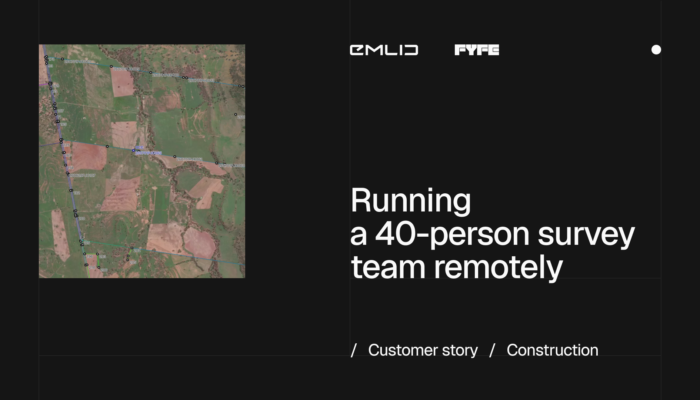
Fyfe’s registered surveyors supervise a team of 40 field surveyors working on remote sites. With Emlid Flow 360, each point taken in the field reaches the office almost straight away, so they can check the work without driving hours to site.
by Ana Ramos October 12, 2026 Tags: Construction, Customer story, Emlid Flow 360, Reach RS4, Reach RS4 Pro
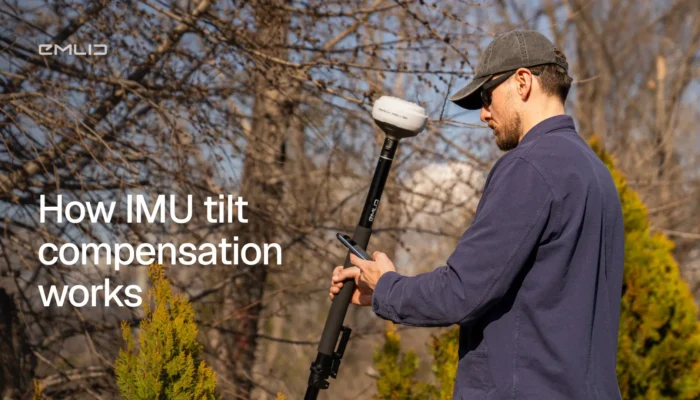
Tilt the pole, skip the bubble level, still get the right coordinate. Here’s how IMU tilt compensation works, what affects its accuracy, and when to use it in the field.
by Eric van Rees July 23, 2026 Tags: GNSS, Land Surveying, Reach RS3, Reach RS4, Reach RS4 Pro, Reach RX
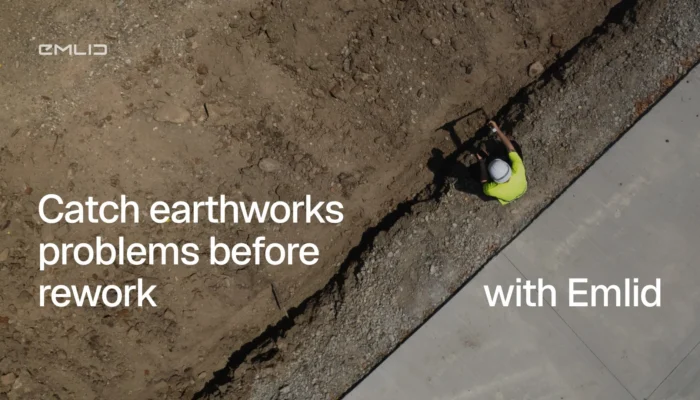
The design said 5,000 m³. The site needed 7,000. Here’s how to set up earthworks planning and progress tracking so the gap shows up on site, not on the invoice.
by Natalia Botygina July 14, 2026 Tags: Construction, Emlid Flow, Emlid Flow 360, Reach RS4

An as-built survey records the final position, dimensions, and elevation of finished structures before they’re covered or handed over. This guide walks the full workflow with Reach receivers, Emlid Flow, and Emlid Flow 360.
by Natalia Botygina June 25, 2026 Tags: Construction, Emlid Flow, Emlid Flow 360, Emlid NTRIP Caster, Emlid Studio, GNSS, Reach RS4, Reach RX2
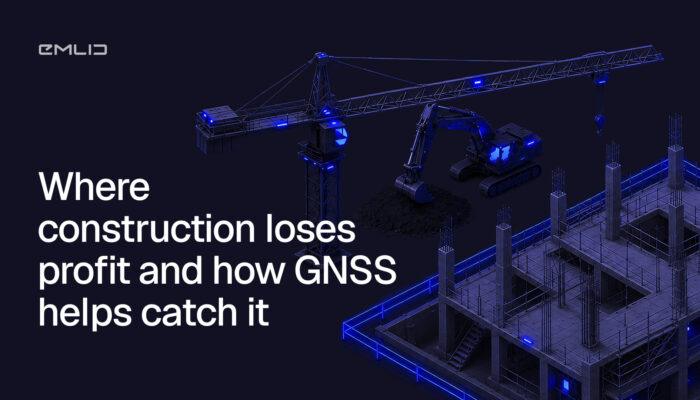
On most projects, profit doesn’t vanish in one big loss. It leaks out in small moments: a measurement that’s off, a crew standing around, a quantity you can’t prove. Here’s where it happens and how GNSS helps you catch each one before it costs you.
by Ana Ramos June 23, 2026 Tags: Construction, Emlid Flow, Emlid Flow 360, GNSS, Reach RS3, Reach RS4, Reach RS4 Pro
Catching errors early is what separates efficient construction projects from costly rework. This guide breaks down how field crews can take control of QA/QC workflows—and keep projects moving without delays.
by Natalia Botygina April 8, 2026 Tags: Construction, Emlid Flow, Emlid Flow 360, GNSS, Reach RS4, Reach RS4 Pro
Choosing the right RTK correction delivery method affects your accuracy, reliability, and workflow. This guide breaks down radio, NTRIP, and CORS options to help you find the best setup for your field conditions.
by Natalia Botygina March 24, 2026 Tags: GNSS, Reach RS4, Reach RS4 Pro, RTK, Tutorials

Waiting for surveyors slows jobs down. Learn the GNSS workflows your crew can run in-house to verify work, catch errors early, and keep machines moving without losing accuracy.
by Ana Ramos February 9, 2026 Tags: Construction, Emlid Flow, GNSS, Industries, Reach RS4, Reach RS4 Pro, Reach RX2

Long-term projects need long-term accuracy. This article explains when to use a permanent GNSS base station, how it works, and how to set it up for reliable positioning over days, weeks, or years.
by Anna Moroz January 21, 2026 Tags: GNSS, Products, Reach RS2+, Reach RS3, Reach RS4, Tutorials
Get news about Emlid devices, features, events, new services, and discounts